
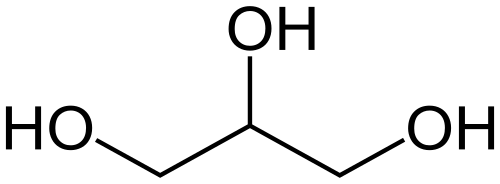
The Many Benefits of Glycerin for the Skin
von
Glycerin remains one of the most vital components in dermatological science, serving as a versatile tool for maintaining skin health. This report explores its chemical nature, safety profile, and functional applications based on recent research.
What is Glycerin?
Glycerin, also known as glycerol, is a simple trihydroxy alcohol that appears as a colorless, odorless, and viscous liquid [1, 2]. It occurs naturally in all animal and vegetable matter as glycerides (esters of fatty acids) or as lipids in intercellular spaces [1, 2]. Due to its three hydroxyl groups, glycerin is highly hygroscopic, meaning it has a remarkable capacity to attract and hold water molecules [3].
While it is frequently used as a bulk drug substance in clinical settings for various medical indications [1], its primary role in the cosmetic industry is as a high-performance humectant and solvent [2]. It can be produced through the hydrolysis of natural fats and oils or synthesized from non-triglyceride sources like propylene [2].
The Safety of Glycerin
The safety profile of glycerin is exceptionally robust, backed by extensive clinical data. The Cosmetic Ingredient Review (CIR) Expert Panel has officially concluded that glycerin is safe for use in cosmetic products at current industry concentrations [2].
Research highlights several key safety factors:
Irritation and Sensitization: Clinical studies show that glycerin is generally non-irritating and has a very low potential for skin sensitization, even in concentrations as high as 65.9% [2].
Metabolic Safety: When ingested or absorbed, glycerin is rapidly metabolized in the liver, behaving similarly to other carbohydrates [1, 2].
Systemic Safety: Comprehensive studies on reproductive and developmental toxicity have shown no adverse effects, confirming its safety for broad consumer use [2].
What Glycerin Does for the Skin and Cosmetic Application
Moisture Sorption: The moisture-retention capacity of glycerin is concentration-dependent. Research has demonstrated that at concentrations above 70%, glycerin undergoes „moisture sorption,“ where it actively pulls water from the environment into the skin layers [3].
Barrier Restoration: Glycerin is essential for maintaining the integrity of epidermal cells [4]. It is frequently used as a key ingredient in barrier repair moisturizers to treat dry, itchy, or inflamed skin [5]. In patients with inflammatory diseases like atopic dermatitis or psoriasis, glycerin acts as an adjuvant therapy by reducing transepidermal water loss (TEWL) [6].
Mechanical Softening: Using atomic force microscopy, scientists found that glycerin solutions penetrate the intercellular lipids of the stratum corneum, significantly decreasing its „Young’s modulus“ (stiffness) and making the skin more flexible and soft [7].
Post-Bathing Recovery: Clinical trials have shown that applying a 10% glycerin solution immediately after bathing (the „soak-and-smear“ technique) helps the skin barrier recover much faster than if the skin is left untreated [8].
Versatile Formulation: Beyond hydration, glycerin is used in cosmetics as a viscosity-decreasing agent, a hair conditioning agent, and a fragrance ingredient [2].
Bibliography
1) University of Maryland School of Pharmacy, et al. Glycerin Summary Report. Prepared for the US Food and Drug Administration, 1-35, 2021.
2) Becker, L. C., et al. Safety Assessment of Glycerin as Used in Cosmetics. International Journal of Toxicology, 38, 65-225, 2019.
3) Chen, H. J., et al. Moisture retention of glycerin solutions with various concentrations: a comparative study. Scientific Reports, 12, 10232, 2022.
4) Balwierz, R. J., et al. Assessment of the moisturizing potential of a two-phase topical care product containing vegetable oils, glycerin, panthenol, and sodium hyaluronate – a preliminary studies. Acta Poloniae Pharmaceutica Drug Research, 79, 245-254, 2022.
5) Madnani, N., et al. Revitalizing the skin: Exploring the role of barrier repair moisturizers. Journal of Cosmetic Dermatology, 1, 1-10, 2023.
6) Kang, S. Y., et al. Moisturizer in Patients with Inflammatory Skin Diseases. Medicina, 58, 888, 2022.
7) Yanagiya, S., et al. Mechanical Properties of Stratum Corneum in Glycerin Solution by Atomic Force Microscopy. e-Journal of Surface Science and Nanotechnology, 13, 461-464, 2015
8) Shi, V. Y., et al. The Comparative Effects of Various Moisturizers on Epidermal Barrier Function Recovery After Bathing in Atopic Dermatitis. SKIN, 1, 1-1, 2016.